
What Is Clean Language and How Does It Improve Massage Outcomes?
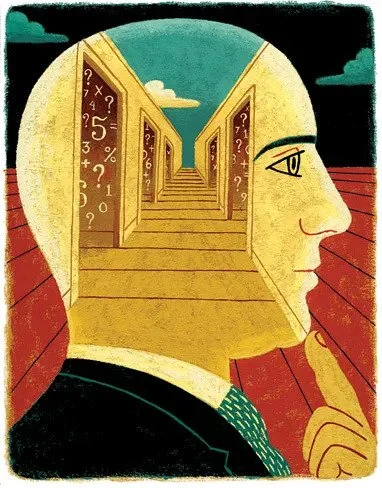
If you’ve scheduled a session with me in the past year then you have no doubt been prompted to select whether or not you'd like to add a ‘Clean Language Session’ onto your massage. Now, most of you are probably asking yourself…’does this guy swear so much that we need to pay extra for him to stop?’ Well, luckily (or unluckily depending on who you are), that’s actually not what that add-on is asking you. Clean Language is actually a separate service that I offer which I learned in late 2024. It’s what we would consider a ‘Mind-Body Practice’ which aims to illuminate the intrinsic connection between our thoughts and their subsequent expressions in the body…or vice versa. This particular mind-body practice is a dialogical medium in which, through a series of particularly structured questions, we create a space to allow your mind and body to have a conversation. This means that you’re going to have an opportunity to decode the sensations of your body into verbal language - which is typically metaphorical. With this information, we can create broader connections between your pain and the events that are currently happening in your life or have happened in the past. This opens up new doorways of treatment and understanding - which can yield immediate results or foster a more fertile soil for future healing.
So wait, what do we mean by ‘Clean’ then if it’s not about swearing? Well, we’ll get to this in more detail in the coming sections but to respond briefly, we regard this process as ‘clean’ because the facilitator is not interjecting any of their own biases or judgements into the process. The structure of the questions are such that there is very little interpretation or insight coming from the practitioner. This creates a space that is ‘clean’ in the sense that it’s not being muddied by the facilitators perspectives, which allows the client to stay connected to their own internal processing rather than be pulled or influenced in subtle ways.
There’s some nuance to this that we can explore once we lay some more groundwork.
That’s the TLDR version of what this article is about. If you’re a returning reader though, you know that I can’t just leave it at that. So let’s take a little trip together into the world of Clean Language and see if this is a practice that could potentially bring you benefit.
The History of Clean Language
Clean Language is a process that was created by the New Zealand born psychotherapist, David Grove, back in the 1980s and 1990s. Grove’s career was focused primarily on those who were struggling with PTSD, phobias, and other childhood traumas. Over the course of his years spent practicing, he had begun to notice that many of his clients would often describe their experience in metaphor; ‘I’m carrying a massive weight on my shoulders.’, ‘There’s a wall between us’, or ‘This person in my life is a dark shroud’. This interested Grove and so he started to focus on these metaphors, intuiting that there was more information consolidated within them than immediately apparent. Yet when he pivoted his attention to them, he recognized that the questions he would ask them often distorted their original meaning by subtly imposing his own implicit ideas onto them.
To take a look at an example of how this distortion could play out, let’s assume that you’re in my massage office and are telling me about a pain you’ve been having in your neck. In our brief conversation, you also mention to me that you’ve been having a hard time meeting deadlines at work and that it feels like you’re barely keeping your head above the water. If I weren’t trained in clean language, I may hear this and respond to you with something along the lines of, ‘ Yeah, I can see how a failure to meet expectations can feel like you’re drowning a little, that pain in your neck is likely being exacerbated by that.’ Now, in a sense I did hear your metaphor and I’m responding to it, but I’m also ADDING the notion of ‘meeting expectations’, and of ‘drowning’. In order to respond to these prompts, you’ll either have to go with my interpretation that you’re failing to meet expectations and that you’re drowning, or you’ll have to correct them and reassert your experience. In both situations, the door to your own embodied metaphorical sense of the situation closes, and ultimately so does your access to the inherent wisdom that lies in that sense.
Realizing this predicament, David Grove set out to create a series of questions that wouldn’t require the client to abandon their embodied metaphorical landscapes. This proved to be fairly challenging as much of the structure of our language subtly imposes the speakers views onto the conversation. In order to not impose his interpretations onto what his clients were reporting, David began forming his questions with as little words as possible. In fact, much of his responses were simply repeating the words that his clients said verbatim, not only with the same wording but also the same cadence. This allowed their original emphasis and delivery to remain unchanged, which creates a sort of linguistic mirror. In hearing their words repeated back to them paired with the simple open ended questions, his clients found themselves connecting more firmly to their own experience, almost as if David wasn’t there at all. Immersed in their own sensations, thoughts, emotions, memories, hopes, fears, pains, and excitements, his clients were able to see new connections that they were unable to access prior, ultimately allowing them to see new pathways toward therapeutic breakthroughs, insights, and clarification.
Over the decades, Grove expertly and precisely elaborated on this system to create what is now known as Clean Language. It’s practiced in fields all across the therapy, professional development, artmaking, and business worlds. It’s accessibility and relative ease of facilitation has allowed it to augment an uncountable amount of practices across the world. This is where I come in, as a manual therapist who strongly emphasizes the mind-body connection in my work. Before we get into the intersection of massage and clean language though, I think it’s important to cover some of the core topics of the Clean paradigm, such as, the importance of metaphor and leveling the ‘expert-patient’ power dynamic.
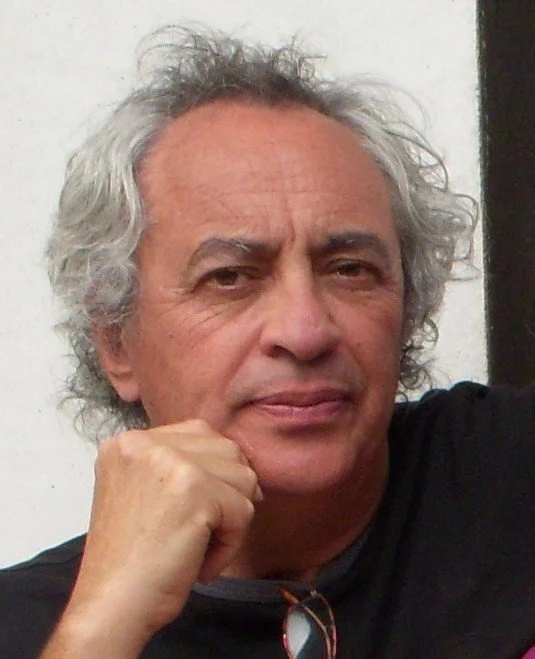
(Pictured to the right is David Grove)
What is a Metaphor?
In order to really tap into the full power of clean language, it’s incredibly helpful to understand what a metaphor is and how deeply they’re embedded in our cognition. On the surface, most of us could define a metaphor roughly the same; we know that they’re figures of speech that directly compares two things by stating one is the other without using ‘like’ or ‘as.’ Some examples of this are: ‘She has a heart of gold’, ‘Life is a highway’, or my most used metaphor, ‘I could eat a horse’. Now obviously these are not literal statements but rather comparisons between an abstract concept and something tactile. The woman’s heart is not literal gold, it’s just that it has qualities that we would associate with gold; whether it be a glow, a richness, or a pleasantness. Life isn’t an actual highway, but it’s like a highway in that its open, long, and has to be journeyed across. I couldn’t actually eat a horse when I’m hungry but…wait no, that one is real for me.
While we’re likely all familiar with metaphor in this context, what you may not realize is that metaphor is actually a core mechanic of how we think and communicate with others. According to the ‘Conceptual Metaphor Theory’ created by George Lakoff, metaphor is not merely “a decorative device, peripheral to language and thought”. Rather it is “central to thought, and therefor to language itself.” This comes most into play when we’re trying to understand abstract concepts. Take for instance the example of a THEORY which isn’t a physical thing; you can’t hold it, you can’t smell it, you can’t taste it, yet we have an intuitive sense of what a THEORY is. In order for us to talk about THEORIES though, we need to have some way of relating with it that can create a shared understanding. While there are many ways to conceptualize a THEORY, the one that we tend to use the most in our society is that a THEORY is like a BUILDING. They can be built on strong FOUNDATIONS or SHAKY GROUND, they can be BUILT UP or TORN DOWN, and they tend to have a FRAMEWORK. These feel very obvious since they’re so baked into our language (another metaphor), but these are creations that we’ve all agreed to and based (another metaphor) our shared understanding on.
To really appreciate the depth of this understanding (metaphor), I think it’s important and interesting to take a look at the three categories of conceptual metaphors that Lackoff and his team have created. I would encourage you to spend some time (metaphor) with each of these categories and think about all of the ways in which you utilize these styles of metaphors in your day to day life. I would wager that it would be incredibly challenging to communicate at all without using them. (metaphor)
(This is all very relevant to manual therapy so just hang in there!)
Three Categories of Conceptual Metaphor
1. Orientational Metaphors
These kinds of metaphors involve spatial relationships such as up/down, in/out, on/off, or front/back. Here are some examples:
- More is UP; Less is DOWN: “The stock market is up,” “keep your voice down,”
- Happy is UP; Sad is DOWN: “That boosted my spirits,” “I’m feeling really low these days”
- Control is UP; Lack of Control is DOWN: “I’m on top of the situation,” “He is under my control”.
- Future is FRONT; Past is BACK: “My eyes are looking forward to what’s next,” “The house dates back to the 18th century”
- Intimacy as CLOSENESS; Distance is SEPARATION; “We’re really close,” “We’ve grown apart”
2. Ontological Metaphors
Ontological metaphors are when we project something concrete onto something abstract. They allow us to refer to abstract concepts more directly, quantify them, locate them in place, and interact with them. They essentially make experiences into “things” we can talk about. Here are some examples:
- Time is an OBJECT: “I don’t have enough time,” “Thanks for giving me some of your time”.
- Mind is a CONTAINER: “He has a lot of ideas in his mind,” “I would hate to see what’s in your mind.”
- Theories are BUILDINGS: “We need to build a strong argument,” “His idea has a weak foundation.”
- Inflation is an ENTITY: “Inflation is lowering our standard of living,” “We need to combat inflation.”
3. Structural Metaphors
These metaphors structure an abstract concept in terms of a more concrete concept. They allow us to understand and reason about an abstract idea by using the logic and structure of a different more familiar concept. Examples:
- Argument is WAR: “He effectively attacked his position,” “I think he defended his stance pretty well,” “Nah, he totally lost that argument”.
- Labor is a RESOURCE: “I have a lot of work to get through,” “This is going to take a lot of work”
- Time is a RESOURCE: “I’m almost out of time,” “You really can’t afford to spend more time on that”.
- Life is a JOURNEY: “The road of life has many ups and downs,” “You never know where life takes you”.
So as we can see from this brief exploration, metaphor is a much more complex phenomenon that we conventionally give it credit for. It is central to the structure of our thinking itself, how we organize knowledge, and how we use abstract language. In order to even think about something that isn’t in the tangible world, we have to relate it to something more graspable, whether it’s physical or just less complex. The implication that this brings us to is that our understanding of the world is less about separate linear data points that we’re stringing together and it’s more of a web of criss-crossing meanings that are informing each other simultaneously. An example of this in action can be seen with the ARGUMENT is WAR metaphor. In order to understand what a WAR is, we have to compare WAR to a PHYSICAL ENTITY. “The war is spreading”, “The conflict has broken out”. We could also describe the WAR as a substance, “The war has engulfed the region”, “Tensions are thick in the air”. So in order to comprehend ARGUMENT as WAR, we also need to understand the metaphors that make up our understanding of WAR.
The last twist of complexity that I’ll introduce here is that these webs of meaning are UNIQUE to each individual. While there are huge overlaps in our meaning maps that we learn culturally, much of our cognitions are conditioned based on our lived experience. So when you tell me that you’re barely keeping your head above water, what I hear might have some overlaps, it’s ultimately going to experienced differently than what you’re communicating to me.
Utilizing the clean perspective acknowledges this difference in understandings and seeks to minimize the cross contamination as much as humanly possible. You might be asking yourself….’why is this important and what does this have to do with massage and helping my sore neck?’ It’s important because within the metaphors that we use to describe our physical or emotional ailments exists a doorway into the solutions for those problems. In connecting more fully to the “weight on your shoulders”, you can learn useful information such as it’s shape, color, where it came from, what put it there, and importantly, what would it feel like to be rid of it? Each one of these pieces of information in itself can lead to profound clarifications and pathways toward healing. It’s an opportunity to map out the topography of our inner experience, to know ourselves and our world more deeply.
If you’re a returning reader to this blog then you’ve undoubtedly heard me shout from the rooftops time and time again, ‘PAIN IS A BIO-PSYCHO-SOCIAL PHENOMENON!!!’. This means that it’s not merely that your anatomy is broken or injured but it’s rather a combination of variables that is comprised of your physiology, psychology, stress levels, qualities of relationships, diet, sleep hygiene, life satisfaction, creative output and a litany of other elements. Many of these aren’t immediately obvious unless we have dedicated practices to being still with ourselves. Clean language is a process which allows us access to our hidden worlds through the doorway of our sensations and the metaphorical descriptions that arise when we try to articulate them.
The Role of the Facilitator and Massage
As a practitioner of this modality, the biggest tool I have at my disposal is presence. That is, the ability to maintain attunement to the space and the process as it unfolds. In other words, it’s a gentle attentiveness that doesn’t seek to manipulate or interfere with the client’s work. This quality of presence carries a different tone to it than a regular “non-clean” therapy session. There’s a sense of being seen and accommodated that can in itself be an agent of healing. To be witnessed in a space of non-judgement as we uncover hidden aspects of ourselves creates a safety that feels incredibly rejuvenating for the nervous system. In order to offer this presence, the facilitator should exhibit a great deal of patience by not attempting to steer the client into any particular outcome. They’re simply walking side by side with the client into whatever new terrain arises in the client’s experience.
Beyond presence, a skilled practitioner should have a deep understanding of the use for each of the questions. What’s the best option to choose for what the client is presenting? Generally, the right question yields an embodied result in the client - that is to say, there’s something that FEELS right about the question. In my 4 months long training in which we practiced dozens of times, I’ve experienced this more often than not. This experience of a facilitator choosing the right question should result in an unfolding of more information. It’s as if a mirror is being held up against our sensations, revealing another dimension of our experience that we otherwise wouldn’t have had access to. While many therapies operate in this way, the clean perspective ensures the mirror is polished and not contoured or tinged with any sort of color.
In the case of manual therapy, this process would be carried out before a traditional session. The information that gets uncovered this way can then be brought into the touch therapy. In having a clearer image of our inner world, we can tune in and listen to what those images themselves would like to have happen, rather than what we habitually think SHOULD happen, which is more of a mental event rather than a real wisdom coming from the body itself. Let’s ground this in an example.
Now this is obviously a made up session but it does a good job of highlighting the nature of the exchange. It’s not uncommon for the process to bring the client some form of relief by the end. At this point, the pair can move into a traditional massage session, now equipped with the imagery that was generated by the process. The facilitator can use this information to guide their choice of technique. For instance, if the client reported there being an angry buzzing hornet, the therapist may want to avoid too much vibration as it could exacerbate that sensation. Instead, there may be some use for some longer holds to help create a sense of stability that grounds the buzzing. At any point in the session, the facilitator could also prompt the client with some light clean questions to tease out more insight for the session.
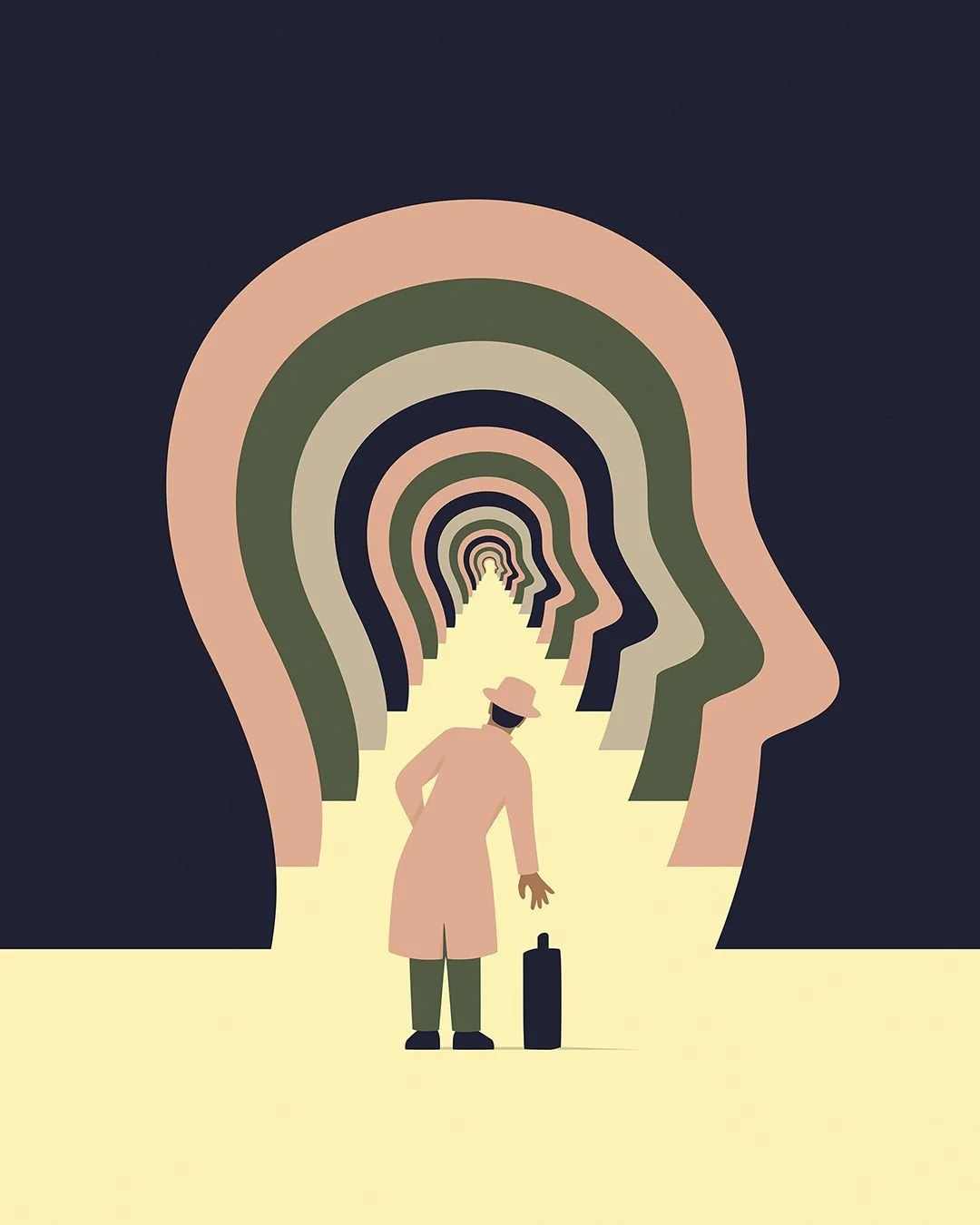
Here’s a mock clean language session followed by how we would incorporate it into the massage:
Facilitator (F): Where would you like to begin?
Client (C): I’ve been noticing some pain in my left shoulder.
F: Is there anything else about pain in your left shoulder?
C: Yeah it seems to radiate down into my arm
F: Is there maybe a texture, color, or shape to this pain in your left shoulder that radiates down into your arm?
C: It’s kind of like a jagged red lightening bolt
F: Is there anything else about a jagged red lightening bolt?
C: Yeah it feels like it’s buzzing.
F: That buzzing is like what?
C: It’s like an angry hornet whose hive has been destroyed
F: What would this angry hornet whose hive has been destroyed like to have happen?
C: It would like to settle down and feel secure in a new home.
F: What would it feel like for it to settle down and feel secure in a new home?
The client pauses for a moment, allowing some message to come through.
C: It would stop buzzing and find some stillness. I think it’s already starting to calm down a little just in acknowledging that.
F: Would this be a good place to pause and go into the massage?
C: I think so!.
The Symptom Can Be a Resource
The last piece to this puzzle that I find fascinating is the discovery that our symptoms tend to contain their solutions. In the example I created above, the client was able to personify a sensation related to their pain as an angry hornet who had just lost their home. There’s an emergent logic that begins to arise as the client familiarizes themselves with the angry hornet. If we look back to the exchange, we can see what the hornet wanted was a sense of security for itself. That is the balm for it’s angry buzzing - the question is, how do we provide that security? If we were to continue forward in the clean process, the answers usually emerge in some form or another. Sometimes it’s as simple as the example above illustrates - simply asking how it would feel to be resolved can bring us closer to that resolution. Sometimes though, the process needs to go even further as the angry horney proves to be just a part of a bigger landscape. Either way, if pursued to it’s own ends, a sense of resolution can occur.
This is because the body appreciates homeostasis, and much of it’s daily expenditure of energy goes toward maintaining this internal balance. Pain is an expression of an imbalanced or threatened system, and through the clean process we can begin to see the message being conveyed underneath the pain - the thing that’s imbalanced. This process of turning toward our sensations rather than away, creates an environment where we can slowly open up to the messages of our body and begin listening to the quiet but powerful wisdom that they contain.
Whether it’s one session or a series of sessions, the clean process leaves us with trail markers on the previously unexplored terrain of our inner landscape. These markers, whether it’s a buzzing hornet, a roiling ocean, or a giant rubber chicken with a pained expression (yes, things can get very strange), each contain within them a pathway toward that process of regaining homeostasis. Many times, the clean interview can lead us directly down those pathways and help resolve some of the imbalance, though others are merely lighting a torch for future journeying and discovery. Each person’s experience is going to be wildly different, as explained above in the metaphor section. This is why it’s important for the facilitator to remain open and committed to a strong sense of ‘not-knowing’. The places that I personally have wandered through this process and helped facilitate others through are remarkably varied, interesting, and oftentimes profound.
Conclusion
While many people may be looking for a less involved practice to incorporate into their manual therapy session. I strongly believe that everyone could find some benefit in experiencing this process even once. There is a felt sense that comes with the clean language exchange that can prove to be very illuminating into the nature of our mind-body connection. If you want to learn more about this process, I recorded a podcast episode with my teacher on the subject. His name is Nick Pole and he literally wrote the book on ‘Clean Manual Therapy’. It’s a wildly interesting conversation and includes a real demonstration of the practice (with me as the client). I’d strongly recommend it if you’re at all interested in this kind of material - which you must be if you made it to the end of this article.